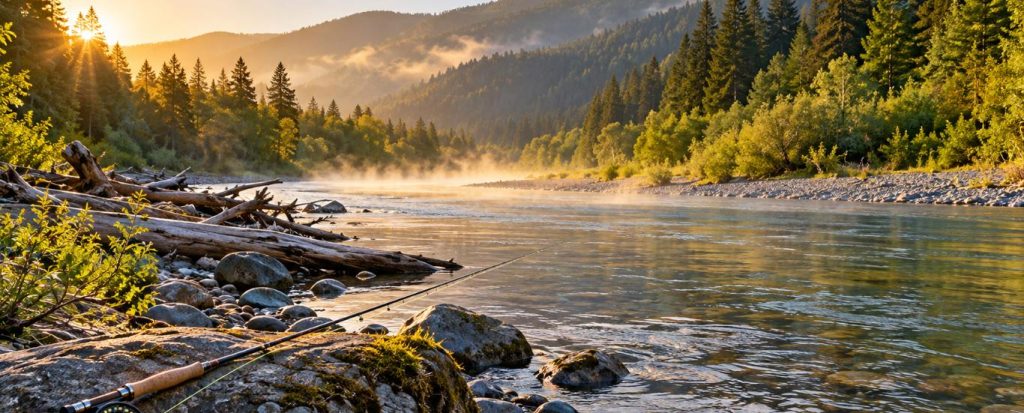
The Chetco River runs clear and green out of the Siskiyou Mountains and meets the Pacific right beside Brookings. For anglers, that makes the town a handy base. This guide to Chetco River fishing explains what the river is known for, when the main season runs, and what to check before you cast a line. We rely on public agency sources here and point you to the official regulations, because rules and river conditions change.
Why the Chetco Is Worth the Trip
The U.S. Fish and Wildlife Service notes that the Chetco was added to the national Wild and Scenic Rivers system in 1988, and it lists fish, recreation and water quality among the river’s outstandingly remarkable values. Its river profile describes a fishery dominated by salmon and trout, including winter steelhead, fall Chinook salmon and sea-run cutthroat trout. The same profile says the river has some of the highest salmonid smolt returns of any Oregon coastal stream. In short, it is a river with a long reputation among anglers.
Chetco River Salmon and Steelhead: What to Expect
The Forest Service Chetco River recreation page says the river is known for winter steelhead, fall Chinook and sea-run cutthroat. It lists the primary season as November through March and says the river fishes best at flows of roughly 2,000 to 4,000 cubic feet per second on a falling river. It also mentions side-drifting for steelhead and back-bouncing for Chinook, and notes that licensed guides are available. Treat these as starting points, not promises. Fish runs vary from year to year, and nobody can guarantee a catch.
Chetco River Fishing Rules: Check Before You Go
Fishing rules differ by species, season and stretch of river, and they can change during the year. Before any trip, review the current regulations and licensing information from the Oregon Department of Fish and Wildlife. Confirm what license you need, which species you may keep, and which sections are open. If you are unsure, a local guide can explain how things work on the water.
Floating and Boat Access
If you plan to float the river, the Forest Service says a permit is required year-round, that free self-issue permits are available at a registration station on Forest Service Road 1376, and that motorized boats are prohibited. Launch points are located along North Bank Chetco River Road. The page also says there are no restrooms or drinking water at the site, so bring what you need. Winter rapids can be harder than summer ones, so hiring a guide is a sensible choice if you do not know the river.
Plan Around the Weather and the River
Winter is the main season, which means rain, cold mornings and changing water levels. Check the National Weather Service forecast for Southwest Oregon before you leave, and look at river conditions the same morning. Heavy rain can raise and cloud the water quickly. If the river is not safe, a good plan B is an easy day on the coast. Our storm watching guide and our post on Brookings in January offer ideas for wet days.
Fishing in Brookings, Oregon Beyond the River
Many visitors combine river days with time on the coast. The ocean, the harbor and the beaches are all close by, and rules for saltwater fishing are different from river rules, so check with ODFW for those too. If you want a break from fishing, our Harris Beach guide and our guide to redwoods near Brookings are good rest-day options. Before any beach walk, check NOAA tides and currents and read the Oregon coast beach safety tips.
A Simple Angler’s Checklist
- Confirm your license and the current rules with ODFW.
- Check the weather forecast and river level on the morning you go.
- Pack warm, waterproof layers, since winter days are cold and wet.
- Bring water, food and a charged phone, because facilities along the river road are limited.
- Tell someone where you are going and when you plan to return.
- Consider a licensed guide if you are new to the river.
Eat Well After a Cold Day
After a morning on the river, a hot meal is the best reward. Our guide to eating in Brookings lists places to start, and you can check each restaurant’s hours before you go. If you would rather keep it simple, a kitchenette suite lets you prepare easy meals. Read about kitchenette suites in Brookings to see how that works.
Budget-Friendly Trips
Fishing trips do not need a big budget. Winter is a quieter season, and our post on winter hotel deals in Brookings explains how to compare offers. Our list of free things to do in Brookings helps fill the rest of the day. Always confirm current rates directly with the hotel.
What to Pack for a Winter Day on the River
Good gear matters as much as good timing. Wear waterproof outer layers and warm base layers, and choose boots with solid grip, because river rocks are slippery when wet. Bring a spare set of dry clothes, a hat and gloves, plus a thermos of something hot. A small first-aid kit, a headlamp and a charged phone are sensible extras, since daylight is short in winter and cell coverage can be limited along the forest road. If you are renting or borrowing equipment, ask a local guide or shop what suits the current water.
Safety Around the Water
Rivers can rise fast after heavy rain, and cold water is dangerous even for strong swimmers. Never wade beyond your comfort level, wear a life jacket on the water, and keep a safe distance from steep banks. Pay attention to the forecast and to fire or road alerts posted by the Forest Service, because conditions on forest roads can change by season. If you are not sure whether a stretch is safe, skip it and try again another day.
Making It a Full Trip
Many anglers treat a day on the river as one part of a longer stay. Plan one early morning on the water, then spend the afternoon warming up, exploring town or walking a quiet beach. If you are traveling with family or friends who do not fish, they can enjoy the coast while you are out. A relaxed schedule also gives you flexibility if the weather or river level changes your plans. Fishing in Brookings, Oregon works best when you leave room for a rest day.
Guided Trips or Fishing on Your Own?
A licensed guide can save time, supply equipment and explain how local conditions affect the fishing, which is especially helpful on a first visit. Going on your own gives you more freedom and costs less, but it means you handle the research, the rules and the safety planning yourself. Whichever you choose, read the current regulations and confirm that any guide you hire is licensed. Ask what is included, how many people the boat holds and what happens if the river is unfishable on your date.
Where to Stay
Blue Coast Inn & Suites is on Chetco Avenue in Brookings, a handy base for fishing in Brookings, Oregon, and a short drive from the river. Check-in is at 3 PM and check-out is at 11 AM, and guests booking must be 21 or older. Our cancellation window is 24 hours, which helps if weather changes your plans, and the hotel policy page has the details. Browse all rooms, including the two-queen suite with kitchenette, which sleeps four and has a microwave, a fridge and a Keurig. Fishing with a group? The two-bedroom suite sleeps up to six.
Traveling With a Dog
We welcome dogs, up to three per room, at $20 per night per dog. Dogs must stay off the furniture and cannot be left unattended in the room. Read our overview of a pet-friendly hotel in Brookings, Oregon before you book. Questions? Contact us or call 541-469-2161.
Frequently Asked Questions
When is the main Chetco River fishing season?
The Forest Service lists the primary season as November through March. Check ODFW for current rules.
What fish is the river known for?
Winter steelhead, fall Chinook salmon and sea-run cutthroat trout.
Do I need a permit to float the river?
The Forest Service says a free self-issue permit is required year-round, and motorized boats are prohibited.
Can I hire a guide?
Yes. The Forest Service notes that licensed guides are available.
Are dogs allowed at your hotel?
Yes, at $20 per night per dog, up to three per room, subject to our pet rules.