Every spring, thousands of gray whales travel north along the Pacific coast, and the Oregon shoreline gives you a front-row seat. If you want to plan a trip around whale watching in Oregon in spring, timing and patience matter more than gear. This guide explains when the northbound migration passes Brookings, where to look, what to bring and how to stay safe, using information from the Oregon Coast Visitors Association and Oregon State Parks.
When Gray Whales Pass the Oregon Coast
According to the Oregon Coast Visitors Association, the northbound migration runs from late March through June. The same page says about 18,000 gray whales pass close to the Oregon coast on each trip, and that early arrivals can appear in late February. Southbound whales pass from mid-December through January. Whales are not on a timetable, so treat these dates as a guide and not a promise.
Why Spring Can Be Easier
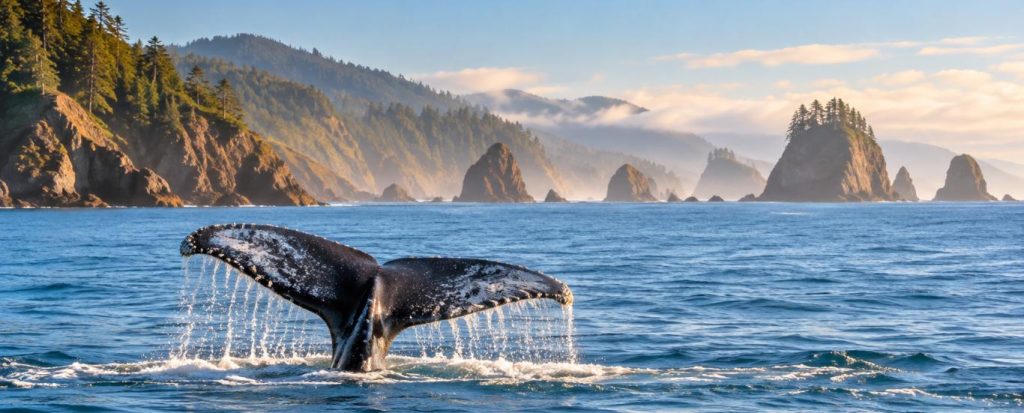
The Visitors Association explains that southbound whales travel quickly and mostly about five miles offshore, while northbound whales move more slowly and often come within half a mile of shore. That difference is one reason many visitors enjoy the spring whale watching Oregon coast season. The page also notes that mothers with calves usually arrive in May, which can make late spring especially rewarding if you are patient.
Whale Watching in Oregon in Spring: Where to Look Near Brookings
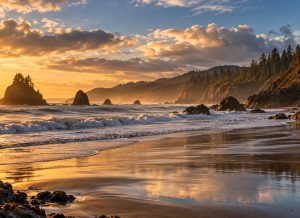
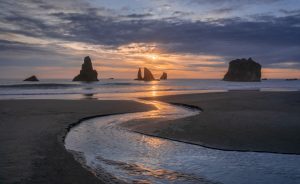
Any spot with a good ocean view can work, but the Visitors Association lists Harris Beach State Park in Brookings and Cape Ferrelo among southern Oregon sites. Oregon State Parks describes Harris Beach as having sandy beaches, rocky outcroppings and views of Bird Island, and a day-use parking permit is required. Cape Ferrelo is one of the stops in the Samuel H. Boardman State Scenic Corridor, which the park service describes on its official corridor page as about 12 miles of viewpoints, picnic areas and trailheads along Highway 101. Our whale watching guide and Harris Beach State Park guide have more tips.
Spring Whale Watch Week
The Visitors Association describes the Whale Watching Spoken Here program, in which trained volunteers staff viewing sites from Washington to Crescent City, California, during peak weeks. One of those weeks falls in the last week of March. Dates and sites can change, so check Oregon State Parks for the current schedule before you plan a trip around it. Even outside the official weeks, you can watch on your own at many viewpoints.
Tips for Spotting Whales
- Look in the morning. The Visitors Association says morning light with the sun behind you is best.
- Find spouts first. Scan with your eyes, then use binoculars to focus.
- Choose calm days. Smooth water makes spouts easier to see.
- Be patient. Give yourself at least an hour at a good viewpoint.
- Dress warmly. Headlands are windy and cold even on sunny days.
Boat Trips and Charters
Charter boats can offer closer views, and the Visitors Association says they are best from spring through fall. It lists a boat charter operating out of Brookings. Operators set their own schedules, prices and conditions, so contact them directly, and ask what happens if the weather is rough. Remember that sightings are never guaranteed on land or on the water. If you get seasick easily, a viewpoint on land may be the more comfortable choice, and it costs nothing. Whichever you choose, keep a respectful distance from wildlife and follow any guidance from park staff, volunteers or boat crews. Responsible watching protects the animals and keeps the experience good for everyone who comes after you.
Check the Weather and Tides
Whale watching is better on calm days, so check the National Weather Service forecast before you go. If you also plan to walk the beach, look at NOAA tides and currents and read the Oregon coast beach safety tips. Stay well back from cliff edges when you use a headland viewpoint.
A Sample Whale Watching Day
- Morning: Start at a viewpoint with warm layers, a thermos and binoculars.
- Midday: Walk a beach or visit a museum while the light changes.
- Afternoon: Return to a different viewpoint and watch again.
- Evening: Warm up with an easy dinner.
Our spring break guide and two-day Brookings itinerary show how to add whale watching to a longer trip.
Resident Whales and Summer Sightings
Spring is not the only time to look. The Visitors Association says about 200 part-time resident gray whales stay off Oregon from June through November, and it describes whale watching as a year-round activity on the coast. That means a summer or fall trip can still include a chance to see spouts, though the large migration crowds are a spring and winter feature. If you are flexible with dates, ask yourself whether you want the busiest migration weeks or a quieter visit with fewer viewers at each overlook.
Plan Your Spring Whale Watching Oregon Coast Trip
A good trip leaves room for patience. Pick two or three viewpoints, arrive in the morning, and plan to stay at least an hour at each one. Check the forecast the night before, because fog, wind and rain make whales much harder to spot. Bring layers, a hot drink and realistic expectations, and you will enjoy the time even if the whales are shy. Many visitors say the quiet waiting, the sound of the surf and the sudden spout on the horizon are the best part of the day.
Whale Watching With Kids
Children can get restless waiting for a spout, so turn the day into a game. Give each child a notebook, a pair of binoculars if you have them and a simple goal, such as spotting three spouts. Alternate watching with other activities, and bring snacks. Our family itinerary for Brookings includes outings that mix patience with play.
Whale Watching With a Dog
If your dog is traveling with you, check the rules at each viewpoint before you go. At our hotel, we welcome dogs up to three per room at $20 per night per dog. Dogs must stay off the furniture and cannot be left unattended in the room. Because dogs cannot be left alone, plan a viewpoint where they can come along. See the pet-friendly rooms FAQ and our dog-friendly beaches guide.
What to Pack
- Binoculars and a lens cloth
- Waterproof, windproof layers and a hat
- A thermos, snacks and water
- A folding stool or blanket
- A camera or phone with a zoom lens
Eating, Saving and Staying
Our guide to eating in Brookings helps you plan meals, and our list of free things to do in Brookings covers low-cost ideas. Blue Coast Inn & Suites is on Chetco Avenue in Brookings. Check-in is at 3 PM and check-out is at 11 AM, and guests booking must be 21 or older. Our cancellation window is 24 hours, and the hotel policy page has the details. Browse all rooms, including the two-queen suite with kitchenette, which sleeps four, and the two-bedroom suite, which sleeps up to six. Questions? Contact us or call 541-469-2161.
Frequently Asked Questions
When is the northbound migration?
The Oregon Coast Visitors Association lists late March through June.
Are northbound whales closer to shore?
The Visitors Association says they often come within half a mile of shore.
When do mothers and calves appear?
Mothers with calves usually arrive in May, according to the Visitors Association.
Where can I watch near Brookings?
Harris Beach State Park and Cape Ferrelo are both listed as southern Oregon viewing sites.
Are dogs allowed at your hotel?
Yes, at $20 per night per dog, up to three per room, subject to our pet rules.