Every winter, thousands of gray whales swim south along the Pacific coast, and Brookings is a good place in Oregon to watch them pass. If you want to understand the gray whale migration in Oregon and find the best viewpoints near town, this guide covers the timing, the top lookout spots and a few tricks that make whales much easier to see. For a broader overview, see our main whale watching guide for Brookings.
Understanding the Winter Migration
According to the Oregon Coast Visitors Association, gray whales pass the Oregon coast twice a year. The southbound trip runs from mid-December through January, when roughly 18,000 whales travel toward breeding grounds in Baja California. The northbound return happens from late March through June, and mothers with calves are typically seen in May.
That means the winter window is short and special. If you plan your trip for late December or early January, you are visiting during the southbound migration. The same program that supports spring and summer sightings also runs a winter Whale Watching Spoken Here week from Christmas to New Year’s week, when trained volunteers help visitors find whales at designated sites.
Whale Watching Spots in Brookings
The best whale watching spots Brookings visitors use are high, open and close to the water. A good lookout lets you scan a wide stretch of sea, which matters because migrating whales often pass within sight of the shore. Here are the places to start.
Cape Ferrelo Viewpoint
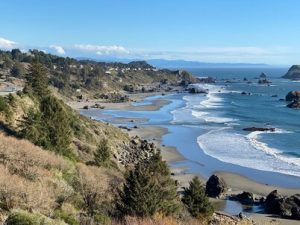
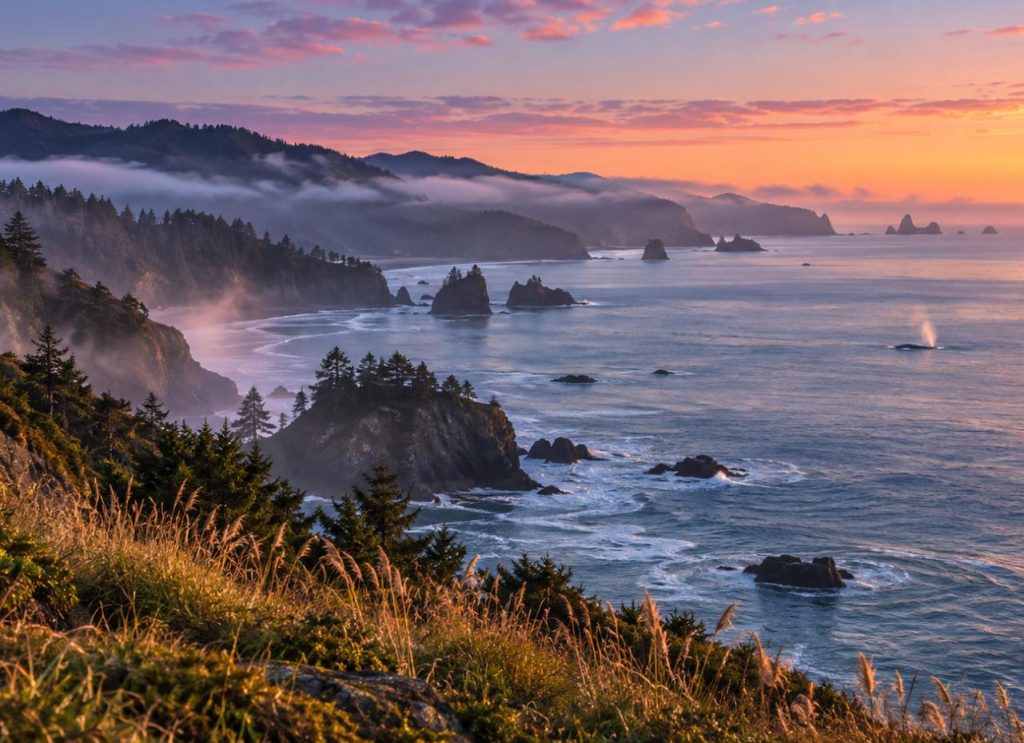
Oregon State Parks describes the cape as an excellent spot for whale watching in fall and spring. It sits within the Samuel H. Boardman State Scenic Corridor, which the park service describes as 12 ocean-hugging miles along Highway 101 between Brookings and Gold Beach. See the official Boardman corridor page for current information.
Other Boardman Corridor Stops
The corridor offers one turnoff after another, many with picnic areas, viewpoints and trailheads. Named stops include House Rock Viewpoint, Whaleshead Beach, Natural Bridges and Arch Rock. Each gives a different angle on the water, so if one spot is crowded or foggy, try the next.
Harris Beach State Park
The park lists gray whale viewing on winter and spring migrations, plus harbor seals, sea lions and seabirds. Visit the Harris Beach State Park page, and read our Harris Beach guide for parking and access. News coverage of past winter weeks has listed Harris Beach among the staffed sites, so check current dates and hours with Oregon State Parks.
How to Spot Whales Like a Pro
- Arrive early. Morning light with the sun behind you reduces glare, a tip from the Oregon Coast Visitors Association.
- Scan the horizon with your eyes first, looking for a puff of mist.
- Once you see a spout, raise your binoculars.
- Choose calm days when possible, because flat water makes spouts easier to see.
- Be patient and give each viewpoint at least 20 to 30 minutes.
Gray whales are known for double spouts, spy hopping, where a whale lifts its head straight out of the water, and occasional breaches. Watching for these behaviors makes the wait more exciting.
Dress for the Weather and Stay Safe
Coastal viewpoints are exposed, so wind and rain can arrive quickly. Check the National Weather Service forecast for Southwest Oregon and wear waterproof layers, a hat and sturdy shoes. Stay well back from cliff edges and read the Oregon coast beach safety tips before you go. If the surf is huge, our storm watching guide explains how to enjoy it from a safe distance.
Plan a Whale Weekend in Brookings
The gray whale migration Oregon visitors come to see is a natural event, so sightings are never guaranteed. Treat every viewpoint as a chance, not a promise, and enjoy the scenery either way.
A simple plan works best. Spend the first morning at a Boardman corridor viewpoint, take a midday break for lunch in town, and finish the day with a beach walk. On day two, try a different viewpoint at a different tide. If you are traveling over the holidays, our guide to Christmas and New Year on the Oregon coast shares more ideas, and our post on Brookings in January covers what the weather is like. For help choosing between camping and a room, read our hotel near Harris Beach State Park guide.
What to Bring
- Binoculars
- Waterproof jacket and warm layers
- A thermos of something hot
- A camera or phone with a zoom lens
- Sunglasses for bright mornings
- A small folding chair for longer watches
Traveling With a Dog
Dogs are welcome at our hotel, up to three per room at $20 per night per dog. They must stay off the furniture and cannot be left alone in the room. Pet rules at viewpoints and parks vary, so check before you go. Our dog-friendly beaches guide and hotel policy page have details.
Where to Stay
Blue Coast Inn & Suites is on Chetco Avenue in Brookings. Check-in is at 3 PM and check-out is at 11 AM, and guests must be 21 or older. Browse our rooms, including the two-queen suite with kitchenette, which sleeps four and has a microwave, a fridge and a Keurig, handy for a hot drink before a sunrise whale watch. Questions or dates in mind? Contact us or call 541-469-2161.
Frequently Asked Questions
When do gray whales migrate past Oregon?
Southbound whales pass from mid-December through January, and northbound whales pass from late March through June.
Where is the best place to see whales in Brookings?
Cape Ferrelo in the Boardman corridor and Harris Beach State Park are two good starting points, and the park service lists both for whale viewing.
What time of day is best?
Morning, with the sun behind you and calmer water, tends to make spouts easier to spot.
Do I need binoculars?
They help a lot. Find the spout with your eyes first, then use binoculars to watch the whale.
Are dogs allowed at your hotel?
Yes, at $20 per night per dog, up to three per room, subject to our pet rules.